Fiber Optics Vs. Cable Internet
 Jeffrey Kim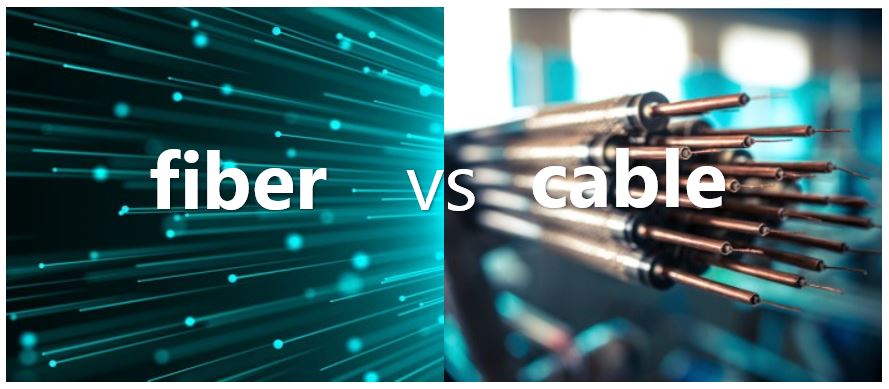
Bad internet sucks! In order not to make that mistake, we have combined two of the most widely used broadband options: cable and fiber. Read on to find out the benefits and drawbacks of each, and which of them will increase the productivity of your office.
What is a cable internet connection?
Cable internet service is offered through the cable TV provider in your area. Internet cables are often offered as an independent option or are easy to cheapen if they are included in a cable television and a telephone service. The internet cable requires a modem and professional installation by a technician, as a cable needs to be transferred to your office.
What is Fiber internet?
The fiber internet is transported through a series of thin and light optical fibers through the modulated light. These optically pure fiber are as thin as human hair and can transmit digital information at impressive intervals. However, because fiber optic cables are not as common as cable TV lines, installing fiber optic cables over the Internet can be more annoying and take a little longer than installing the cable. The fiber is usually installed by a professional, although some vendors offer self-installation. Please note that if you decide to install the fiber, it may not be covered by the supplier’s service contract.
First Round: Reliability
Cable Internet connections are considered reliable Internet services. However, if your business is in an area where there are frequent breaks or cable breaks, you may expect your Internet service to be compromised. If your business needs to use the Internet, it’s a good idea to have an option to secure your Internet access.
Fiber optic networks are generally considered as reliable as cables. The fiber is considered a passive system, meaning that no energy needs to be applied within the system network. Therefore, power outages are less likely to disrupt or interrupt a fiber optic network. Because the conductor is made of glass, it does not generate electricity, so the fiber is immune to interference caused by nearby power lines or high-voltage electrical equipment. In addition, optical fibers are less likely to be damaged by lightning.
Second Round: Availability
Cable is notoriously accessible. In fact, its availability is one of the biggest advantages of fiber. If your business can receive cable TV, you will most likely have access to wired internet. While the cable is widely used, it is not yet available in some rural areas. If your office does not have access to cable TV, you will not have internet access.
The fiber optic internet is not offered in as many markets as cables, but its availability is growing. However, since fiber requires the installation of a new cable, it will take a while for it to reach as many markets as cable, and those located in rural areas will be served last.
Third Round: Speed
The speed of the Internet cable can meet the needs of most small businesses. The cable download speed usually varies between 20 and 300 Mbps and the charging speed of the cable is 7 to 20 Mbps in common. The latency of 100 milliseconds is typical, but the latency between 25 and 500 ms varies. It is important to realize that with internet cable you can share the speed of bandwidth with your neighbors so that more customers use the cable at the same time, the slower speed of the internet has something for everyone. This means that the download speed can drop significantly during peak hours. In general, cable internet is still a solid option for heavy downloads, games and video streaming.
Cable has a reputation for being fast, but the fiber speed is incredibly fast and blows other high-speed Internet options out of the water. In addition, the fiber allows the user to send data at far greater distances while maintaining speed. The download speed of optical fibers ranges from 150 Mbps to 500 Mbps and upload speeds ranging from 65 Mbps to 100 Mbps. These fibers unparalleled speed allows every member of your team to download, upload, send and share files simultaneously without compromising on performance. The implications for web-based companies are incredible. Fiber allows those operating online to offer greater speeds to distances extremely far away, therefore widening the effectiveness of the net they cast.
Final Round: Price
The cost of cable Internet connection varies by location and if you choose to group TV, Internet or telephone services. In general, cable internet is an affordable commercial solution that ranges between $25 and $100 per month.
Keep in mind that you usually pay more for higher speeds and may have to pay an install rate. The fibre optic network is likely to cost your business more per month, but depending on how your business uses the Internet; the speed can be worth it. Fibre plans typically start at around $100 per month but can exceed $300 per month, depending on where your business is located, how fast you are, and how long your service agreement lasts for two years. You may have to pay an installation fee or an activation fee, but some companies offer deals that do not use this price.
Conclusion
Every entrepreneur is looking for the fastest and most reliable high-speed internet option at an affordable price. If available in the region, we recommend that small businesses choose the Internet based on the fibre compared to the cable. When you consider your options, compare apple to apple. In addition to the download and upload speeds, pay attention to information about possible installation costs and read the service agreement carefully.